Oh Deer Retro Christmas Svg Review
As a designer who spends half my life in front of a screen and the other half watching needle bars dance, I approach every new digital asset with a mix of excitement and skepticism. The market is flooded with holiday graphics, but few manage to bridge the gap between "cute" and "commercially viable." Enter the Oh Deer Retro Christmas Svg. At first glance, it looks like another festive addition to a craft folder, but upon closer inspection, it reveals itself as a surprisingly robust option for embroidery designers, small business owners, and Etsy sellers looking to expand their holiday inventory.
This design falls squarely into the Crafts and Graphics categories, yet its potential extends far beyond simple paper crafts. It is built for sublimation, yes, but its visual weight and clean lines make it an excellent candidate for machine embroidery. Whether you are preparing custom apparel, creating personalized gifts, or stocking a boutique shop, understanding how this vector translates to thread is crucial. This review breaks down the practical realities of using the Oh Deer Retro Christmas Svg in real-world production scenarios.
The First Impression: Mood and Visual Personality
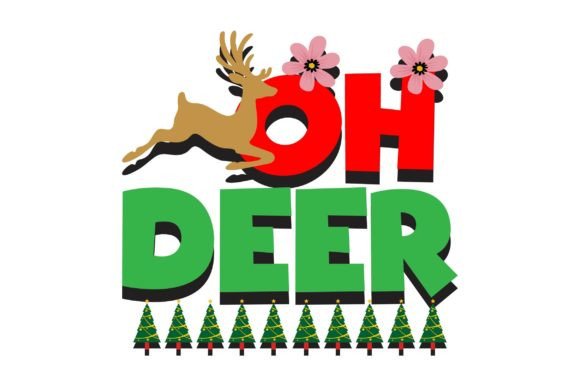
The moment you load the file into your digitizing software or preview it on a mockup, the retro aesthetic jumps out. It doesn’t scream modern minimalism; instead, it leans into a nostalgic, mid-century vibe that resonates strongly during the holiday season. The typography and the deer illustration work together to create a balanced composition that feels warm and inviting without being cluttered. For an embroidery project, this balance is key. Designs that are too busy often lose definition when stitched, especially on textured fabrics like fleece or heavy cotton canvas.
The layout suggests a central focal point, likely the deer head or the playful text, surrounded by enough negative space to allow for clean stitching. This makes it ideal for applications where clarity is paramount. When I imagine this on a sweatshirt embroidery piece, I see a high-quality finish that stands up to close inspection. It has the kind of visual personality that encourages customers to stop scrolling on Etsy or pause at a craft fair booth. It feels professional, not amateurish, which is a significant factor in building customer trust and brand consistency.
Real-World Application: From Screen to Stitch
Let’s talk about where this design actually shines. I recently considered using a similar retro deer motif for a line of holiday-themed tote bag designs. The challenge with tote bags is that the fabric can be uneven, and the surface area is large enough that any stitching errors become glaring. The clean lines of the Oh Deer Retro Christmas Svg mitigate this risk. If digitized correctly, the satin stitch outlines will hold their shape well against the woven texture of canvas or jute.
Beyond tote bags, this graphic is a powerhouse for baby embroidery items. Think of a onesie or a soft blanket for a nursery decor collection. The retro style is timeless enough to appeal to parents who want something that isn’t overly saccharine or generic. It works beautifully as a personalized gift, adding a touch of uniqueness that mass-produced items lack. For a small shop product, this versatility means you can use the same core asset across multiple product types—apparel, home goods, and accessories—maximizing your return on investment for the digital asset.
It also performs exceptionally well as an embroidered patch. Patches require sturdy construction and clear details, and the bold nature of this design ensures that even when shrunk down to a smaller size, the message remains legible. Imagine attaching such a patch to a denim jacket or a backpack; it adds a layer of handmade presentation that elevates the perceived value of the finished product.
Where to Exercise Caution
No design is perfect for every application, and the Oh Deer Retro Christmas Svg is no exception. There are specific contexts where this graphic might struggle. First, consider small hoop sizes. While the design is likely scalable, extremely small dimensions can cause fine details to merge into indistinguishable blobs of thread. If you plan to use this on tiny accessories like jewelry tags or miniature ornaments, test the scale carefully before committing to production.
Fabric choice is equally critical. Textured fabrics, such as chunky knits or heavy wools, can distort the smooth curves of a retro design. Similarly, thin or stretchy fabrics may pucker if the stitch density is too high. In these cases, proper stabilizer selection becomes non-negotiable. Without the right support, even the best design file will result in a warped final product. Additionally, dark fabrics present a contrast challenge. If the design relies on light-colored threads, ensure that the underlying fabric color doesn’t show through the stitches, which can muddy the visual appeal.
Curved surfaces, like caps and hats, also pose a unique challenge. The flat geometry of the SVG must translate smoothly over the curve of the cap front. If the design includes intricate lettering or small decorative accents, these elements may become distorted. It is advisable to inspect small details closely when digitizing for curved applications to ensure they remain crisp and readable.
Practical Notes for Embroidery Designers
To get the most out of this design, follow these practical steps before launching into full-scale production:
- Test on Scrap Fabric: Always run a sample on the exact fabric you intend to use. This reveals issues with tension, puckering, or thread breakage that aren't visible on screen.
- Check Thread Color Contrast: Evaluate how different thread colors interact with the fabric. High contrast generally yields better visibility, but subtle tonal choices can add sophistication.
- Review Stitch Density: Ensure the fill stitch areas are not too dense, which can cause stiffness, nor too sparse, which can leave gaps in coverage.
- Confirm Hoop Size: Verify that the design fits comfortably within your standard hoop sizes to avoid awkward re-hooping or trimming.
- Inspect Small Details: Zoom in on the finest lines and corners. These are the first areas to degrade if the digitization is poor.
- Use Black and White Mockups: View the design in grayscale to check its structural integrity and balance independent of color distractions.
- Compare Light and Dark Backgrounds: See how the design performs on both ends of the spectrum to determine its versatility for different product lines.
- Select Proper Stabilizer: Match the stabilizer type (cut-away, tear-away, or water-soluble) to the fabric weight and elasticity.
- Verify Licensing: Before selling finished items or digital products, confirm the commercial license terms. This protects your craft business from legal issues and ensures you can profit from your work.
Final Verdict
The Oh Deer Retro Christmas Svg is more than just a pretty picture; it is a functional tool for creative entrepreneurs. Its retro charm, combined with a layout that supports clear stitching, makes it a valuable addition to any designer’s library. It excels in custom apparel, holiday gifts, and boutique branding, offering a level of professionalism that appeals to discerning buyers. By paying attention to fabric choice, stabilization, and licensing, you can transform this digital embroidery file into a standout handmade product that drives engagement and sales. For those looking to add a touch of nostalgic warmth to their holiday offerings, this design delivers both style and substance.